Perspective
Googlebook: Google Finally Gives Android Users a Laptop of Their Own
“Google is trying to make Android a real desktop computing experience — not simply a mobile operating system.”
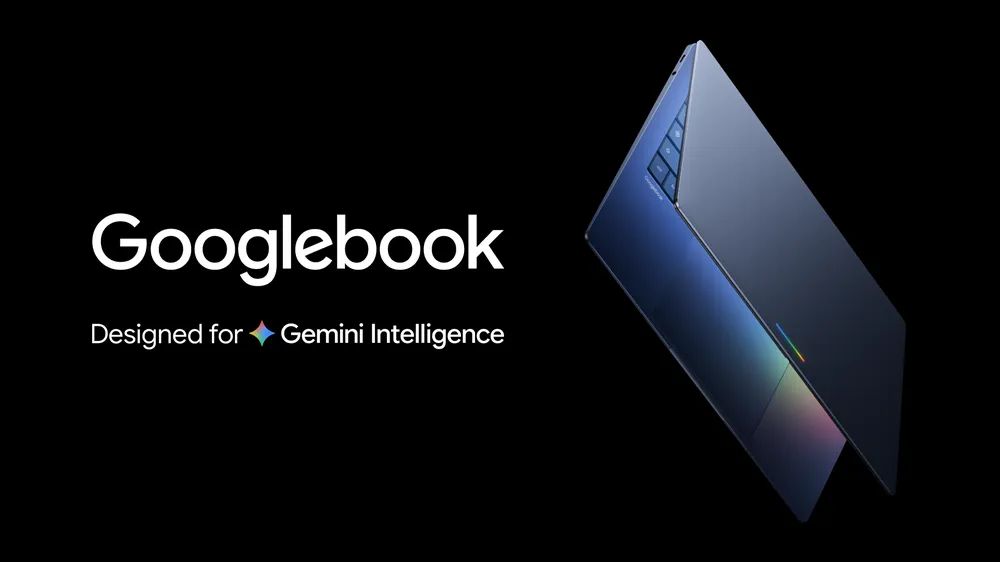
Googlebook: Google Finally Gives Android Users a Laptop of Their Own
What Google’s new premium laptop category means for Android users, Chromebooks and the South African market
By Loyiso Skweyiya
Managing Director, A2Z Communications | A2Z Communications Insights & Media • 22 September 2026
“Google is trying to make Android a real desktop computing experience — not simply a mobile operating system.”
On 21 September 2026, Google opened pre-orders for Googlebook, a completely new category of premium laptops designed around Google's vision of bringing Android, ChromeOS-style desktop computing and Gemini AI together. The first generation is being built in partnership with Acer, ASUS, Dell, HP and Lenovo, with prices starting at US$899.
At first glance, you might ask a very simple question:
Isn't this just a Chromebook?
No. And it is not simply a new Pixelbook either.
That distinction is important, because I believe Googlebook represents something bigger than Google launching another laptop.
I think Google is trying to solve one of the biggest gaps in the Android ecosystem: Android has become an incredibly powerful computing platform, but Android users have never really had the equivalent of Apple's tightly integrated iPhone-and-Mac experience.
Googlebook is Google's answer.
So, what exactly is Googlebook?
Google describes Googlebook as a new category of laptops built on the Android technology stack, combined with desktop foundations from ChromeOS.
That wording is important.
Google is not simply taking Android and putting it on a traditional laptop. It is bringing Android's application ecosystem and device integration together with the desktop capabilities people have come to expect from ChromeOS. And Google is putting Gemini Intelligence right at the centre of the experience.
The first Googlebook range includes premium machines from Acer, ASUS, Dell, HP and Lenovo. The current US lineup ranges from $899 to $1,299, with every model starting at 16GB RAM and 512GB storage. Depending on the model, users get OLED touch displays, Intel Core Ultra or Snapdragon X Elite processors, dedicated NPUs, biometric security and battery-life claims ranging from roughly 13 to 19 hours under Google's test conditions.
This is very different from the way many people still think about a Chromebook.
Googlebook is not Chromebook
The Chromebook category has traditionally been about simplicity, affordability, security and cloud-first computing.
That remains the case.
Google itself says Googlebooks are intended to be a new class of premium laptops, while Chromebooks continue to serve everyday computing needs. Googlebook is therefore not being positioned as the replacement for every Chromebook.
The difference becomes clearer when you look at the hardware and software philosophy.
A Chromebook can be an inexpensive device for a learner, student or business user who primarily needs a browser, Google Workspace, streaming, web applications and basic productivity.
Googlebook is aiming higher.
These machines start at $899. They have premium materials, powerful processors, high-resolution displays, dedicated AI acceleration and much closer integration with Android phones.
So I see Googlebook as sitting much closer to the premium laptop market than the traditional Chromebook market.
And where does Pixelbook fit into all of this?
This is where things can get confusing.
Pixelbook was Google's own premium Chromebook line.
Google launched the original Pixelbook in 2017 as a high-end ChromeOS laptop, with a convertible 4-in-1 design, Intel processors, touchscreen, stylus support and access to Google Play apps.
The Pixelbook was essentially Google's statement that ChromeOS could be a premium computing platform.
Googlebook is different.
Google is now working with established PC manufacturers and defining the software and experience across a new category. Acer, ASUS, Dell, HP and Lenovo are producing the hardware, while Google is defining the Googlebook experience around Android, Gemini and its desktop foundations.
That actually makes the Googlebook strategy more interesting to me.
Google is no longer trying to win the laptop market purely by selling its own hardware.
It is trying to build an ecosystem.
The Android phone is the real story
For me, this is the most interesting part of Googlebook.
Google's pitch is essentially this: Your Android phone should not feel disconnected from your laptop.
When you set up a Googlebook, Google says your Android phone's settings, saved passwords, Wi-Fi networks and messages can move across to the laptop, with the process protected by end-to-end encryption.
Then there are three features that I think could become particularly useful. Continue On allows you to continue tasks from your phone on the Googlebook. Files gives you access to files and photographs from your phone through the laptop's file experience. And Cast My Apps allows you to interact with applications running on your Android phone through a window on the Googlebook.
This changes the relationship between the phone and laptop.
Instead of asking, “How do I move this file from my phone to my laptop?”, the experience starts becoming, “Why would I need to move it manually in the first place?”
That is a very different way of thinking about personal computing.
Android apps finally become part of the laptop experience
Another important difference is the application model.
Googlebook brings together the web and the Google Play Store, giving users access to Android applications alongside traditional web-based applications.
For an Android user, that is significant.
The applications you already understand on your phone become part of the wider laptop environment.
Google is also positioning Googlebook for entertainment and gaming, including Android games and access to PC gaming through services such as NVIDIA GeForce NOW.
But I would still make an important distinction here.
Android app compatibility does not automatically mean that every Android application will feel like a full desktop application.
That will depend on how developers optimise their applications for larger screens, keyboard-and-mouse interaction and desktop workflows.
That is something I would watch closely as Googlebook enters the market.
Then there is Gemini
Googlebook is not simply an Android laptop.
It is an AI-first laptop.
Google describes Googlebook as its first laptop designed for Gemini Intelligence, and the company has built Gemini-related capabilities directly into the desktop experience.
One of the features that caught my attention is Magic Pointer, which uses Gemini to provide additional context and assistance based on what you are working with. There is also Rambler, which is designed to turn spoken thoughts into structured text.
These features may sound like small conveniences, but I think they point toward a bigger shift.
We are moving from computers where the user has to understand exactly which application to open and what sequence of commands to follow, towards computers that increasingly understand the user's intent.
And this is where Googlebook connects with the broader AI shift I have been writing about.
The next generation of computers will not simply be faster.
They will become more context-aware.
Googlebook is also serious about security
Googlebook includes Google's Titan security technology, fingerprint authentication and, on some models, facial unlocking. Google is also promising a long software-support window of up to 10 years.
For business users, this matters.
When we talk about laptops inside organisations, the purchase decision is no longer just about processor speed or screen quality.
We have to consider:
How long will the device receive security updates?
How will user identities be managed?
What happens when the employee leaves?
How securely can corporate information move between devices?
How does the device fit into the company's existing IT environment?
Those are much more important questions for an organisation than whether a laptop has a brighter OLED display.
What about developers and power users?
I think Google is also trying to make sure Googlebook is not dismissed as an Android machine for ordinary consumers.
Google says Googlebook includes Antigravity, its AI-agent development platform, together with a full terminal environment designed for developers and builders.
This is significant.
Google is effectively saying that this is not just a device for watching YouTube, browsing Chrome and answering emails.
It wants Googlebook to become a serious development and productivity machine.
For developers who are already heavily invested in Google's ecosystem, that could be particularly attractive.
However, businesses should still test their actual workloads before standardising on the platform. A powerful laptop does not automatically mean every enterprise application, development stack or specialist business application will run exactly as it does on Windows or macOS.
So, how much will Googlebook cost in South Africa?
This is where things get interesting.
The US pricing starts at US$899, with the current lineup reaching US$1,299.
At the current USD/ZAR exchange rate of roughly R16.25 to the dollar on 22 September 2026, that translates to approximately:
US$899 -> about R14,610
US$999 -> about R16,230
US$1,099 -> about R17,860
US$1,299 -> about R21,110
Those are simply currency conversions.
They are not South African retail prices.
Once shipping, import costs, VAT, reseller margins, warranty arrangements and other costs are considered, the actual South African selling price could be materially higher. SARS confirms that imported goods can attract customs duties and import VAT, with VAT calculated at 15% under its import rules.
As I write this, I have not seen a confirmed official South African Googlebook retail price.
So I would be very careful with anyone advertising a “South African RRP” at this stage unless it can be traced back to an authorised local launch or retailer.
For planning purposes, my expectation is that South African buyers should think in terms of the high-R10,000s to R20,000-plus, depending on model and how the products enter the country.
That is an estimate, not an official A2Z price.
And that distinction matters.
Which Googlebook models are there?
The launch lineup is actually quite broad.
The Acer Googlebook 14 starts at US$899 and has a 14-inch 2.8K OLED touchscreen, 16GB RAM and 512GB storage.
The XPS Googlebook from Dell starts at US$999 and uses a Snapdragon X Elite processor, with up to 18 hours of claimed battery life.
The Lenovo Googlebook 15 starts at US$1,099 and gives users a much larger 15.3-inch 2.8K OLED display.
Then there are the ASUS Googlebook 14 and HP Googlebook 14, both starting at US$1,299, with premium OLED displays and Snapdragon or Intel platforms depending on the model.
I actually like this strategy.
Instead of Google saying, “Here is Google's laptop,” the company is giving consumers several manufacturers, designs and price points while maintaining a common Googlebook experience.
That is much closer to the Android philosophy.
Who is Googlebook really for?
I don't think Googlebook is primarily aimed at somebody looking for the cheapest laptop possible.
There are already thousands of cheaper devices that can handle email, documents, browsing and streaming.
I see the target market as people who are increasingly living across multiple devices and want them to work as one environment.
That includes professionals, entrepreneurs, creators, developers, students who want a premium machine, Android enthusiasts and businesses that live heavily inside Google's productivity and cloud ecosystem.
For an Android user with a premium Samsung Galaxy, Pixel or another compatible Android phone, Googlebook could make much more sense than simply buying a generic laptop.
The value is not only in the laptop.
It is in the connection between the laptop and everything else you already use.
But there are still questions I would ask
I like what Google is doing here, but I am not ready to say that Googlebook has solved the laptop market.
It is a brand-new category.
That means real-world testing is going to matter.
How well do Android applications scale?
How stable is Googlebook OS?
How good is the desktop experience after six months rather than six days?
How well does it handle enterprise environments?
What happens with specialised Windows software?
How does the ecosystem perform when your company uses Microsoft 365, Azure, specialised ERP platforms or industry-specific applications?
And perhaps the most important question: Will Google maintain the category for the long term?
That is a fair question because Google has experimented with premium computing hardware before.
The difference today is that Googlebook is not dependent on Google selling every laptop itself. Acer, ASUS, Dell, HP and Lenovo are now part of the strategy.
That could give the category considerably more reach.
What Android users need to know before buying
The first thing I would say is: don't buy Googlebook simply because you have an Android phone.
The integration is one of its biggest advantages, but you still need to check your actual software requirements.
If your life revolves around Gmail, Google Drive, Google Docs, Chrome, Google Photos, Android applications and Gemini, the experience is designed around exactly that workflow.
If you rely heavily on Windows-only business software, specialised engineering applications or legacy enterprise applications, you need to test those workflows first.
And in South Africa, I would add another consideration: Support and warranty.
Until we have proper local availability, I would want to know exactly who is responsible for the warranty, where the device can be repaired and how replacement parts are handled.
A premium laptop is only premium if the ownership experience is premium as well.
What I think Google is really doing
This is where Googlebook becomes much more interesting to me than simply another laptop launch.
Google is effectively trying to bring the Android philosophy to the PC.
Android has always been about an ecosystem of manufacturers, applications and services operating around a common software platform.
Googlebook takes that philosophy and extends it into the laptop.
And at the centre of that ecosystem is now Gemini.
The laptop knows what is happening on the device.
The phone knows what is happening on the phone.
The cloud knows what information you already have.
And increasingly, AI sits across all three.
That is where I think personal computing is going.
My perspective
I don't think the biggest story here is that Google has launched another laptop.
The bigger story is that Google is trying to make Android a real desktop computing experience rather than simply a mobile operating system.
For years, Android users have had excellent smartphones and tablets, but when it came to serious desktop computing, many still ended up in the Windows ecosystem.
Apple solved this differently. Apple created a tightly connected hardware and software ecosystem between the iPhone, iPad and Mac.
Googlebook is Google's attempt to build a comparable experience around Android.
And I think that is the real significance of this launch.
The fact that Googlebook starts at US$899 also tells me that Google is not trying to compete only in the traditional Chromebook space. It is entering a much more competitive part of the laptop market where customers are comparing devices with premium Windows laptops and MacBooks.
For South Africa, I think the opportunity is particularly interesting for professionals and businesses that already live heavily inside the Google ecosystem.
But I would not rush to standardise an organisation on Googlebook yet.
I would test it. I would test the applications. I would test the security controls. I would test the Android-to-laptop experience. I would test the support model. And, most importantly, I would test whether it genuinely makes employees more productive.
Because that is ultimately how I look at technology at A2Z Communications.
The question is never simply, “What is the newest device?”
The better question is: “What does this technology allow us to do that we could not do as effectively before?”
Googlebook has a very interesting answer to that question.
It is attempting to turn the Android phone and the laptop from two separate devices into one connected computing environment — with Gemini increasingly sitting in the middle.
That, to me, is much bigger than a Chromebook upgrade.
It could be Google's first serious attempt at giving Android users the desktop ecosystem they have been waiting for.
And I think it is one of the more interesting developments in personal computing we will be watching as we move into 2027.
Sources and further reading
• Google — Googlebook: The laptop your Android phone has been waiting for, 21 September 2026.
• Google — Googlebook official model lineup and pricing.
• Google — XPS Googlebook specifications.
• Google — Lenovo Googlebook 15 specifications.
• Google — ASUS Googlebook 14 specifications.
• Google — Introducing Pixelbook, historical Pixelbook specifications and positioning.
• Reuters — Google opens pre-orders for $899 Googlebook laptops, 21 September 2026.
• The Verge — Googlebook launch and ecosystem analysis.
• South African Revenue Service — Imported goods duties and VAT.
• USD/ZAR reference rate, 22 September 2026.