Perspective
Meta Is Rebuilding the Computer Around Our Face
What Alexandr Wang, Ray-Ban Meta, Meta's AI glasses and the new generation of VR tell us about the next computing platform.
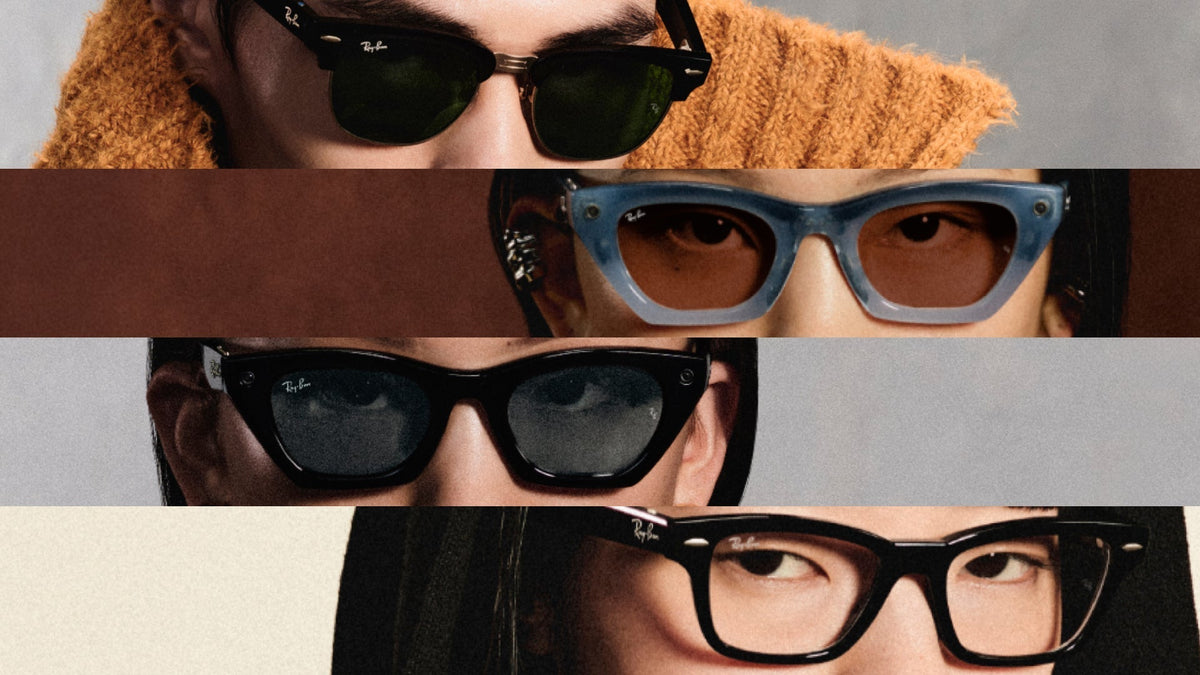
Meta Is Rebuilding the Computer Around Our Face
25 September 2026 • A2Z Communications
What Alexandr Wang, Ray-Ban Meta, Meta's AI glasses and the new generation of VR tell us about the next computing platform.
Written by | Loyiso Skweyiya
Published | 25 September 2026 | A2Z Communications - Insights & Media
Image credit: https://180by2.co.za/blogs/news/meta-connect-2026-everything-new?srsltid=AU7gw4WRtPu2PmE9zJb-aaU9UUv04gPBiTM-2TGzAGEI_d0ElG2svyE5
KEY TAKEAWAY |
The smartphone is still here, but Meta is preparing for what comes after it
There is something happening at Meta that I think is more important than another new gadget launch.
For years, the story around Meta was dominated by Facebook, Instagram and then the metaverse. But after Meta Connect 2026, the direction looks increasingly different to me: Meta is no longer simply asking us to enter a virtual world. It is trying to bring computing, artificial intelligence and digital experiences into the things we already wear.
At the centre of that transition is Alexandr Wang, Meta's Chief AI Officer and one of the leaders of Meta Superintelligence Labs. Wang came to Meta after founding Scale AI, and his role now sits much closer to the company's long-term AI strategy than the old idea of a social-media company building a metaverse side business.
For me, this is where Meta's strategy becomes particularly interesting. The hardware is becoming smaller and more familiar, while the intelligence behind it is becoming more capable.
Ray-Ban Meta is arguably the more important story than VR
When Meta entered VR aggressively, the company had to convince people to wear a headset. With Ray-Ban Meta, the company changed the question.
Instead of saying, 'Put this computer on your head,' the proposition becomes, 'You already wear glasses. Why shouldn't they be intelligent?' That is a much more natural consumer transition.
At Connect 2026, Meta announced Ray-Ban Meta (Gen 3), with up to nine hours of battery life, a 12MP camera, 3K Ultra HD video recording, a new six-microphone array and a new action button for instant access to Meta AI. Meta says Gen 3 starts at $449 in the United States.
Meta also introduced Ray-Ban Meta Audio, a camera-free pair focused on music, calls and hands-free AI. Meta says the glasses weigh 43 grams, can provide up to 12 hours of use on a charge and start at $349 in the United States, with shipping from 13 October 2026.
What stands out to me is not any single specification. It is the direction: the technology is increasingly disappearing into an object we already understand.
AI glasses are becoming an interface, not simply a gadget
The first generation of smart glasses was largely about capturing and playing back media. The next generation is increasingly about context.
Meta says Muse, its personal AI agent, is coming to its AI glasses so people can interact with their agent hands-free throughout the day. Meta positions Muse as an agent that can help organise tasks, work toward goals and take action on a user's behalf. Connecting that capability to glasses changes the interaction model: the assistant can be present while the user is walking, working, travelling or handling something in the physical world.
That distinction matters. A chatbot waits for me to open it and ask a question. A wearable assistant can potentially become part of the environment around me.
Imagine walking through an unfamiliar airport and asking your glasses where to go. Imagine inspecting a piece of equipment and asking an AI assistant what you are looking at. Imagine a technician working on machinery while receiving hands-free instructions. Imagine a sales representative walking into a meeting without repeatedly reaching for a phone.
That is where wearable AI starts becoming a business tool rather than a novelty.
And then there is Alexandr Wang
This is where I think the story becomes even more interesting.
Alexandr Wang's significance at Meta is not really about glasses. It is about the intelligence that makes these devices useful. He leads Meta's AI strategy at the level where models, agents, infrastructure and products increasingly come together.
The company's Connect announcements reinforce that direction. Meta is building a family of devices that can connect users to personal AI from wherever they are, while Muse is being positioned as the software intelligence behind that experience.
That suggests a future in which the hardware is no longer the main interface. The glasses become a gateway to an agent that can understand what the user is trying to accomplish.
To me, this is the bigger strategic shift. Meta is attempting to move from an internet where people open apps, to an internet where people increasingly express an objective and an AI helps coordinate the work.
Meta has not abandoned VR - it has changed the form factor
This is probably the part of the announcement I find most fascinating.
There has been a great deal of commentary over the years about Meta's investment in Reality Labs. But at Connect 2026, Meta introduced something that changes the traditional VR proposition dramatically: Meta VR Glasses.
Meta describes the device as a roughly 100-gram VR system in a glasses form factor, with the heavy compute and battery moved off the face into a connected puck. Meta says the system includes a 5K Infinite Display, micro-OLED technology, 37 pixels per degree, Dolby Vision and Dolby Atmos spatial audio.
The company is positioning the device not only as a VR gaming product, but as a private cinema, immersive live-sports experience, multi-screen workspace and computing platform. Meta says the device is expected to go on sale in spring 2027 for $1,299.99 in the United States.
That is a substantial price, but the idea behind it may be more important than the price. Meta is trying to shrink VR.
Instead of placing users inside a heavy headset with straps and bulky hardware, Meta is moving toward glasses that can be worn for hours. The company is also introducing hologram calling and hands-free interaction using eyes, hands and voice.
In other words, Meta is taking something that historically felt like a gaming peripheral and attempting to turn it into a general-purpose computing environment.
The interesting connection between Ray-Ban Meta and VR
This is why I do not see these products as separate stories.
Ray-Ban Meta and Meta VR Glasses are different devices, but they represent two ends of the same strategic idea.
AI glasses bring intelligence into the real world. VR glasses bring the digital world around you. And both increasingly rely on AI as the interface.
We spent years debating whether consumers would adopt the metaverse. Perhaps that was the wrong question.
Maybe the real question is: What happens when the computer stops being somewhere we go and becomes something we wear?
South Africa should pay attention
From a South African technology perspective, I think this is worth watching closely.
Meta says Ray-Ban Meta, Oakley Meta and Ray-Ban Meta Optics are expected to become available in South Africa later in 2026 as part of its geographic expansion. That means this is not only a technology story happening elsewhere; the products are moving toward our market as well.
For businesses, these devices could eventually affect field services, logistics, sales, training, healthcare, education, tourism and content creation.
A field technician could potentially receive AI-assisted information without removing their hands from a task. A sales consultant could capture notes or information hands-free. A tourist could receive contextual information while moving through a city. A learner could interact with an AI tutor through voice rather than constantly looking down at a screen.
The commercial opportunity is therefore larger than simply selling smart glasses. It is about creating applications and workflows for glasses.
That is where developers and African technology companies should start thinking.
But privacy cannot be an afterthought
The more capable these devices become, the more important trust becomes.
A camera on a smartphone is obvious. A camera embedded in eyeglasses is different because it moves with the wearer and can potentially capture the environment around them.
Meta is keeping visible recording indicators on its camera-equipped glasses, and the company's move into camera-free Ray-Ban Meta Audio also shows that wearable AI does not always need a camera to be useful.
But technology companies cannot solve every trust question with a technical feature. Society will also have to establish new norms around consent, workplaces, schools, meetings and public spaces.
Reuters has reported growing privacy concerns around AI-powered smart glasses, including unease about recording and data handling. That tension is likely to become more important as these devices move from early adopters into everyday use.
The success of wearable AI will depend not only on what the technology can do, but on whether people are comfortable being around it.
My biggest takeaway
When I look at Meta's current direction, I do not think the biggest story is simply Ray-Ban Meta. And I do not think the biggest story is simply VR.
The bigger story is the convergence of AI + computing + wearables.
Alexandr Wang represents the AI side of that equation. Ray-Ban Meta represents the everyday wearable side. Meta VR Glasses represent the immersive computing side. And Muse is being positioned as the intelligence that connects these experiences.
That is a very different Meta from the company that renamed itself around the metaverse in 2021.
The irony is that Meta may not need to build the future around a virtual world after all. It may build it around something much more familiar: a pair of glasses.
And perhaps that is the real shift I see happening now.
The next computer may not sit on your desk. It may not even sit in your pocket. It may be sitting on your face - listening, seeing, interpreting and helping you act.
Loyiso Skweyiya
A2Z Communications
Research sources
Primary sources and independent reporting used to verify product specifications, announcements and context as at 25 September 2026.
• Meta Newsroom - Introducing Ray-Ban Meta Audio and More AI Glasses Styles (23 September 2026)
• Meta Newsroom - The Biggest News From Connect 2026 (24 September 2026)
© 2026 A2Z Communications. Written by Loyiso Skweyiya for A2Z Communications Insights & Media.